What Is Redis? A Simple Guide to Faster and Scalable Web Applications
Redis is one of the fastest ways to make a web app feel smooth and responsive. In this article, we explain what Redis is, why developers use it, and where it fits in real-world applications.
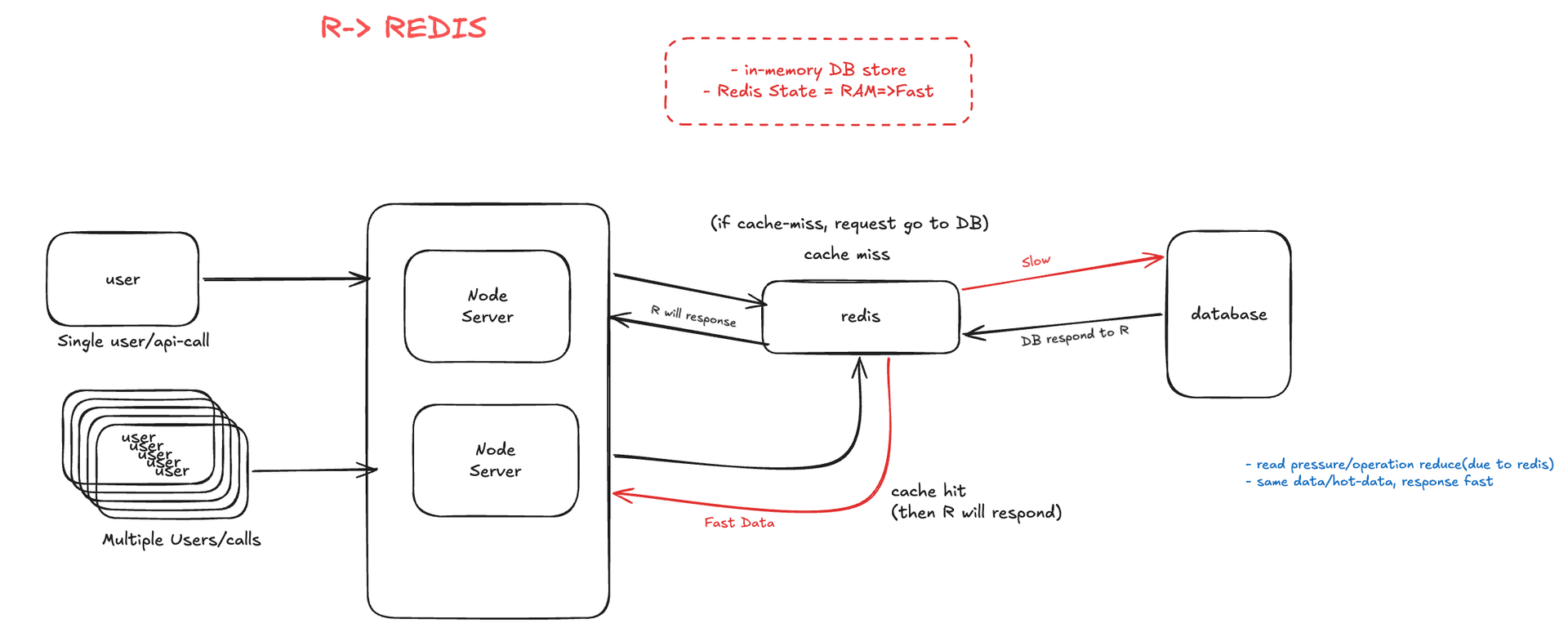
What Is Redis? A Simple Guide to Faster Web Apps
When people talk about making a website faster, more scalable, or more reliable, Redis often comes up in the conversation. It is one of those tools that quietly powers a lot of modern products behind the scenes.
If you have ever logged into an app instantly, seen a page load faster than expected, or received an OTP without delay, there is a good chance Redis helped make that possible.
Redis is often described as an in-memory data store. In simple words, it stores data in memory instead of relying only on disk-based storage. That makes it extremely fast. Developers use it when they need quick access to data that changes often or does not need to live forever.
Why Redis matters
Most applications have a database. That database stores the main data, like users, products, posts, or orders. But not every request needs to hit the database directly.
That is where Redis becomes useful.
Instead of asking the database the same question again and again, an app can check Redis first. If the data is already there, the response comes back much faster. This reduces load on the database and improves the user experience.
In real projects, that usually means:
- faster page loads
- fewer database queries
- smoother login sessions
- better handling of repeated requests
- lower server load during traffic spikes
How Redis works
The basic flow is simple.
A user sends a request to your app.
Your server checks Redis first.
If the data exists there, the app returns it quickly.
If the data is not in Redis, the app goes to the database, gets the data, then stores it in Redis for next time.
This is called a cache hit and cache miss.
A cache hit means Redis already has the data, so the response is fast.
A cache miss means Redis does not have the data yet, so the app has to fetch it from the database first.
This pattern is one of the most common uses of Redis in web development.
Common Redis use cases
Redis is not just for caching. It has several practical uses in real applications.
1. Caching
This is the most common use case. If a page or API response is requested many times, Redis can store the result temporarily and return it quickly next time.
For example, you can cache:
- homepage data
- product listings
- blog post metadata
- user profile data
- AI responses
- search results
Caching is especially useful when the same data is read often but does not change every second.
2. Session storage
Many apps use Redis to store user sessions. This is helpful when you want fast access to login state, tokens, or temporary authentication data.
Instead of checking the main database for every request, Redis can handle session lookups very quickly.
3. OTP storage
Redis is a great fit for OTPs because it supports expiry. You can store an OTP for a short time and let Redis remove it automatically after the time limit.
That makes it ideal for:
- login verification
- password reset codes
- phone number verification
- one-time access codes
4. Rate limiting
If you want to protect an API from abuse, Redis can help track how many requests a user makes in a certain time window.
For example, you can limit a user to:
- 5 login attempts per minute
- 100 API requests per hour
- 3 OTP requests in 10 minutes
This is fast, lightweight, and easy to manage with Redis.
5. Job queues
Redis is also used for background jobs. That includes tasks that should not block the main request, such as:
- sending emails
- generating reports
- processing images
- handling notifications
- running async AI jobs
Instead of making the user wait, the app can push the task into a queue and process it in the background.
Why developers like Redis
There are several reasons Redis is popular in backend systems.
First, it is fast. Since it stores data in memory, access times are extremely low.
Second, it is flexible. Redis is not locked to one use case. You can use it for caching, sessions, queues, counters, and more.
Third, it is simple to integrate into many modern stacks, especially Node.js, Python, Go, and backend frameworks like Express, NestJS, Django, and FastAPI.
Fourth, it helps apps scale better. Once traffic grows, repeating the same database queries over and over becomes expensive. Redis helps reduce that pressure.
Redis is not a replacement for a database
This is an important point.
Redis is usually not the main source of truth. Your database still stores the permanent data. Redis is there to make things faster and smoother.
A simple way to think about it is this:
- Database = long-term storage
- Redis = fast temporary storage
That is why Redis and databases often work together instead of replacing each other.
When should you use Redis?
Redis makes sense when your app has any of these needs:
- repeated reads on the same data
- slow database queries that can be cached
- login sessions or authentication state
- OTP or verification flows
- rate limiting or request tracking
- background processing
- real-time style features
If your application is small and simple, you may not need Redis right away. But as soon as performance and scale become important, Redis becomes a very practical choice.
A simple example
Imagine an app that shows a list of popular blog posts.
Without Redis, every visitor triggers a database query.
With Redis, the app checks whether the popular posts are already cached.
If yes, it returns them instantly.
If not, it fetches them from the database, stores them in Redis, and then uses that cached result for the next visitors.
That means less work for the database and faster loading for users.
Final thoughts
Redis is one of those tools that quietly makes modern apps feel better.
It is not flashy, but it is incredibly useful when performance matters. Whether you are building a SaaS app, an AI product, an admin dashboard, or a high-traffic website, Redis can help your application respond faster and handle load more efficiently.
For developers, learning Redis is a smart move because it shows you how real systems are built for speed, scale, and reliability.
If your goal is to build better web apps, Redis is definitely worth understanding.